Empathy in Historic Preservation | Interview with Historian Madeline Feierstein
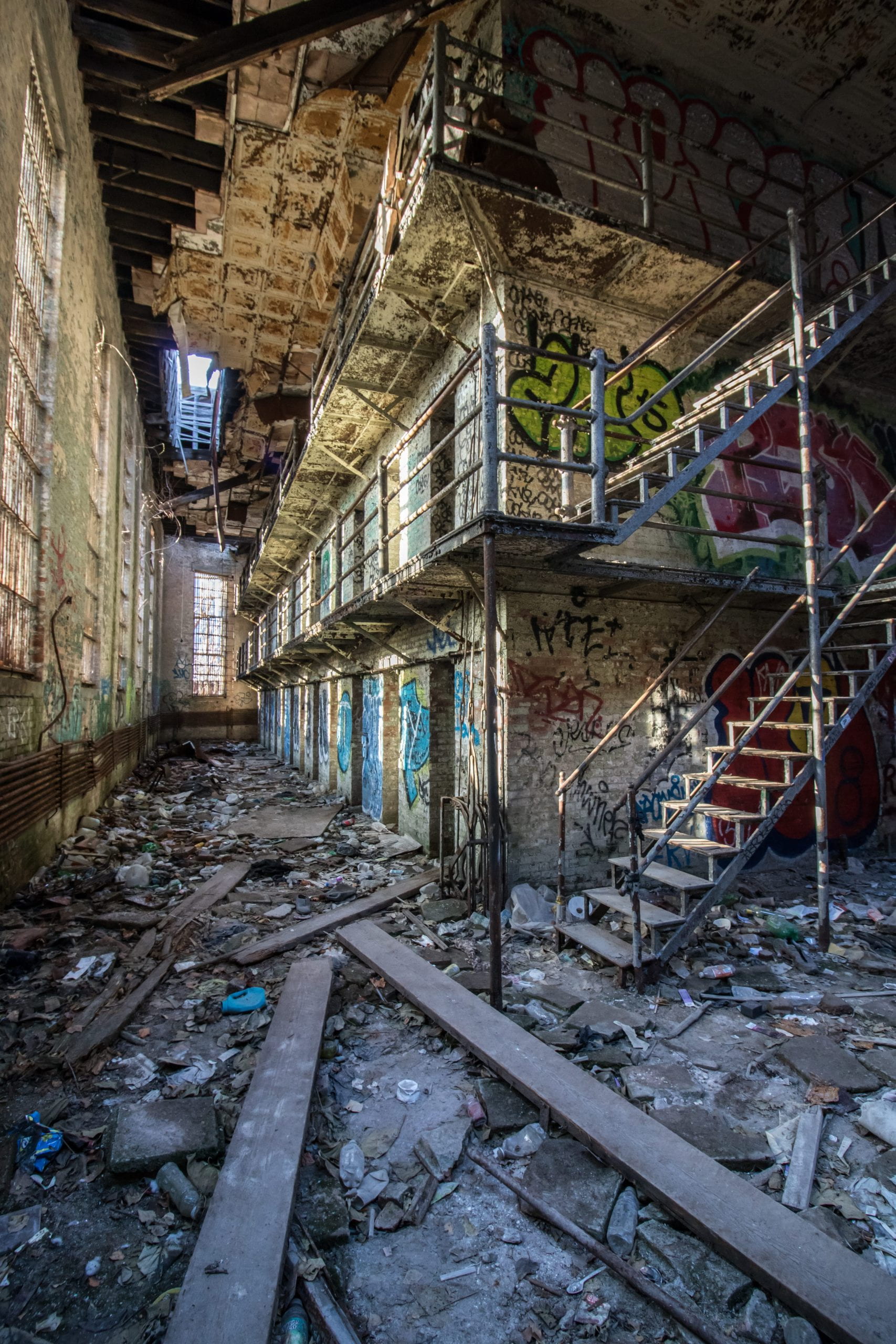
Historian Madeline Feierstein interviews Myles Zhang about his research on the old Essex County Jail in Newark, NJ. They discuss the history of psychiatric institutions and prisons, and then advocate for preserving buildings with darker histories. The preservation of dark sites empowers us to tell a more complete story about how we became a divided and polarized nation today. Myles’s research emphasizes the importance of these sites as vital pieces of American history. VIEW PUBLICATION >
Say no to the Ironbound trash incinerator!

Myles Zhang addressed the Newark City Council in July 2025, criticizing the Covanta trash incinerator for polluting the air, skies, and health of Newark residents. His public testimony highlighted the disparity between the affluent suburban communities that produce this waste vs. the impoverished urban communities where this waste is disposed. Myles’s research argues for fairer reparations and pushes for environmentally sustainable alternatives to improve the health outcomes of Newark residents. VIEW PUBLICATION >

Civil Rights Rebellion in the Essex County Jail

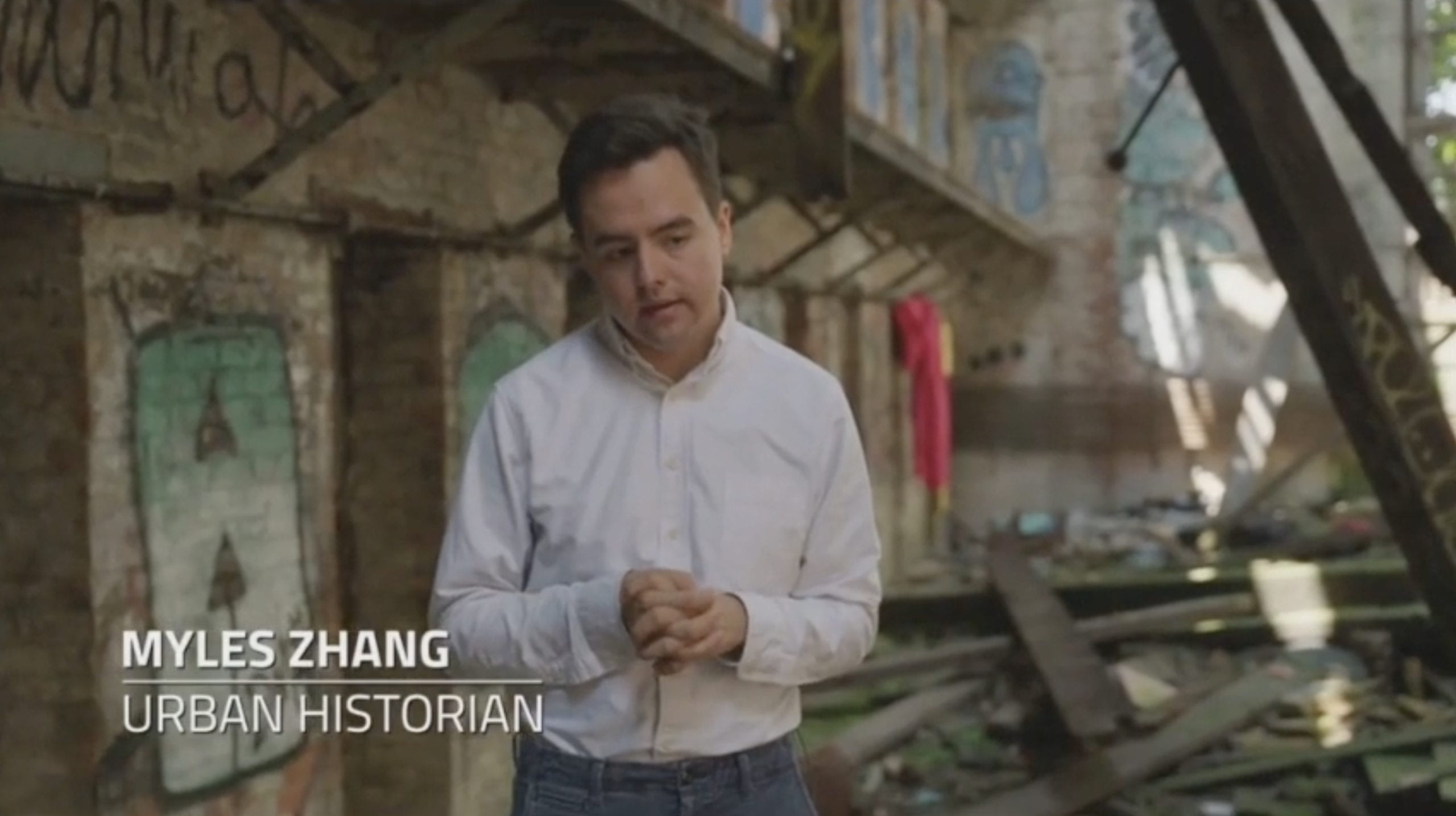
Season 13, Episode 6 of the Abandoned Engineering series for Discovery Channel, explores the old Essex County Jail in Newark, New Jersey. After seeing my research and reading my Master’s thesis project, Discovery Channel approached me about co-creating a documentary about this jail, which was streamed in July 2024, both in the U.S. and internationally in 20 languages. Based on recorded interviews with me, this documentary commemorates those incarcerated here by highlighting the building’s historical significance and broader themes of injustice.

As published by: Discovery Channel / UK Channel 4 VIEW PUBLICATION >

Homeownership and the Racial Wealth Gap

In March 2024, I presented at the Newark Public Library, as part of the Newark History Society’s monthly circuit of public lectures. My two-hour presentation discussed the deep historical roots between Newark’s poverty and the wealth of affluent neighboring suburbs. Beyond simple narratives of redlining and race, the presentation explored the complex economic, political, and policy factors behind Newark’s decline. The research conducted in preparation for this presentation evolved into what is now my book project titled Plundering the City.

View recording of conference presentation. VIEW PUBLICATION >

Racializing Space

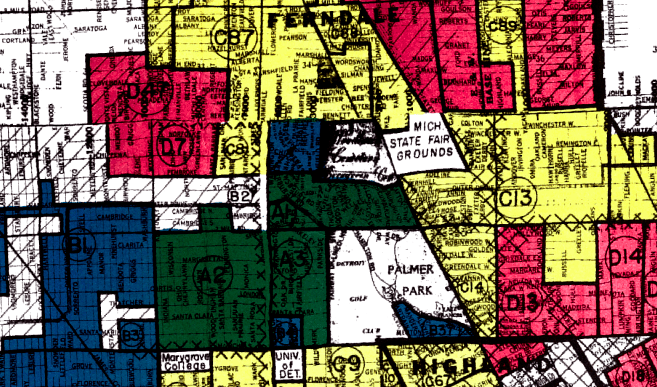
Drawing from the perspectives of architecture, planning, sociology, and history, this panel discussion at the University of Michigan’s College of Architecture and Urban Planning considers the evidence for how and why the American city and suburb – specifically Detroit – remain spatially segregated. What steps must be taken to fulfill the dream of an egalitarian metropolis? Panelists included:
Sociologist Karyn Lacy
American historian LaDale Winling,
Urban planning historian Robert Fishman
Conversation moderated by Myles Zhang. VIEW PUBLICATION >

Bulldozer Urbanism

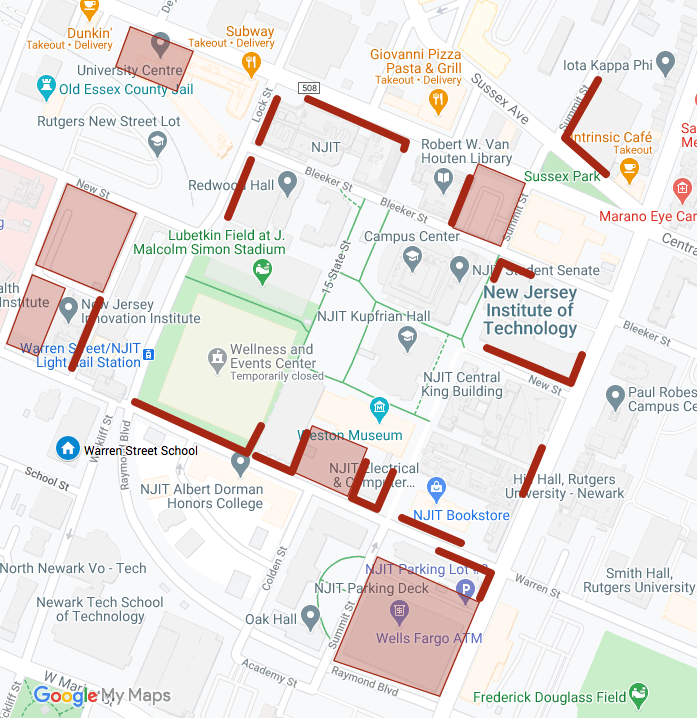
The New Jersey Institute of Technology (NJIT) faces criticism for demolishing historic buildings in Newark’s James Street Commons Historic District. While NJIT invested significantly in architecture for its students, the parts of campus that face toward the city and commmunity lack community engagement and negatively impact urban aesthetics. I advocate for campus planning that enhances neighborhood life and preserves historical assets. VIEW PUBLICATION >

Public Speech: parking vs. preservation

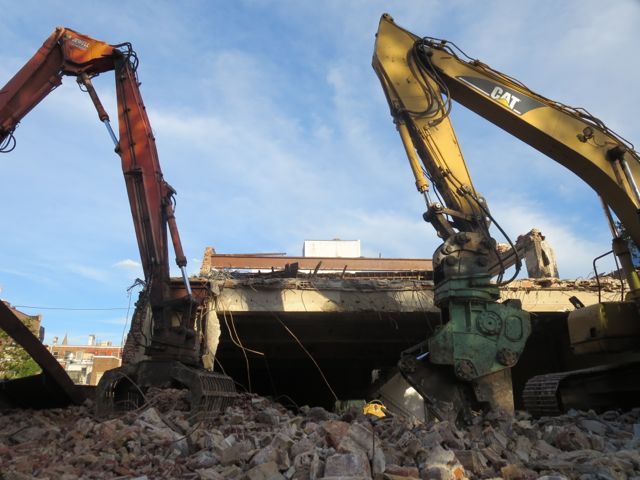
As featured by NJ.com in spring 2019 Update: Following a case filed by New Jersey Appleseed Public Interest Law Center on behalf of PLANewark, Edison Parking admitted that they demolished this building without seeking proper permission from city and state agencies. Edison was in negotations out of court with PLANewark about ways to mitigate the damage they caused. On a warm Sunday in August 2014, bulldozers started tearing away at a historic, turn-of-the-century loft space. Although the first floor was sealed with cinder blocks, the upper floor was adorned with large Chicago-style windows, intricate white terracotta carvings, and Greco-Roman ornament…. VIEW PUBLICATION >